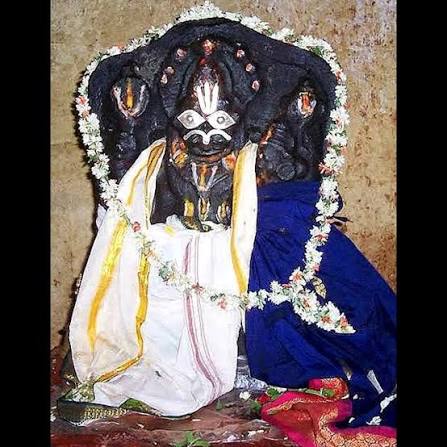
The Sanctum Idol
With the seven-hooded Adishesha above, and Chenchu Lakshmi on his lap
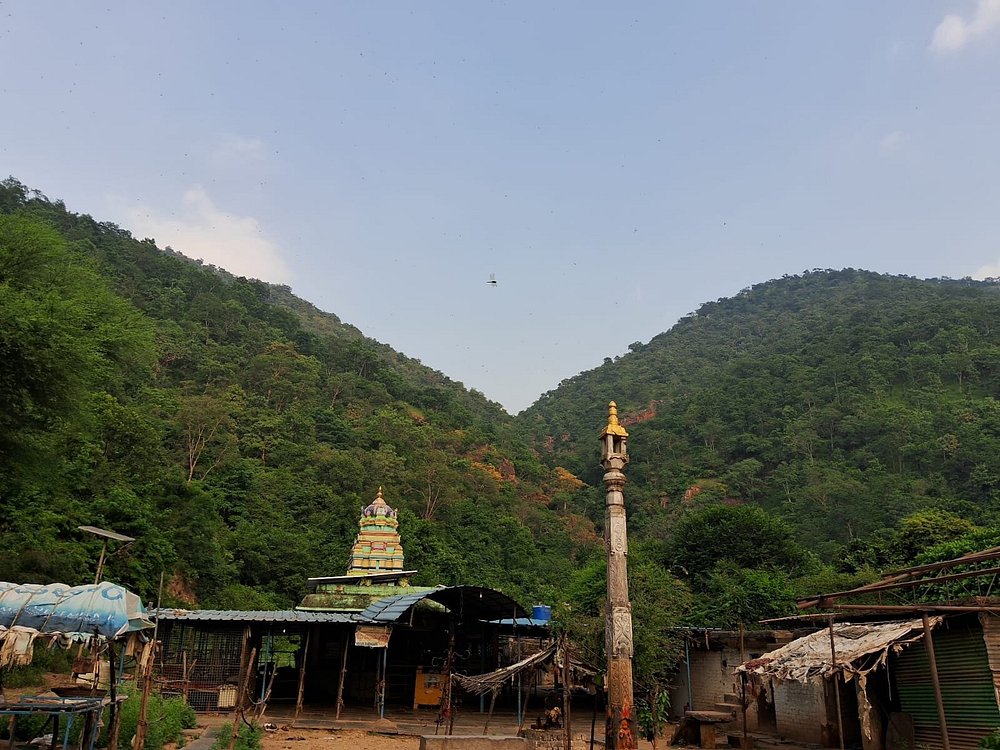
The Temple View
Deep within the Nallamala forest, beside the Bhavanasini river
The journey's final shrine — set deep in the forest on the banks of the Bhavanasini river, Pavana Narasimha is widely regarded as the most serene of the nine forms, and "Pavana" itself means the purifier.
Pavana Narasimha is enshrined with the seven-hooded serpent Adishesha rising above him and Chenchu Lakshmi seated on his lap, with Sage Bharadwaja shown at his feet. A Dwajasthambham stands before the temple, and the shrine is often described as a "Kshetra Ratna" — a jewel among the nine kshetras — for its uniquely tranquil setting.
"Pavana" means purifier, and bathing in the river that runs beside the temple is believed to cleanse both mind and karma. It is traditionally the last of the nine shrines visited on the Nava Narasimha yatra, marking the completion of the pilgrim's spiritual journey.
More than one sage and saint is said to have found release from suffering at this remote forest shrine — its purifying reputation runs through several distinct traditions.
Tradition holds that Sage Bharadwaja freed himself here from brahma-hatya dosha, the grave sin of killing a Brahmin, through devoted worship of Narasimha at this very spot.
According to one well-known tradition, the philosopher-saint Adi Shankara composed or recited the Lakshmi Narasimha Karavalamba Stotram here, seeking the Lord's protection against a threatening Kapalika ascetic.
The Bhavanasini river flowing past the temple is considered purifying in its own right, with bathing here believed to wash away sins accumulated across past and present lives.
Having journeyed from the fierce Jwala Narasimha through seven other forms, pilgrims traditionally complete their Nava Narasimha yatra here — the purification at Pavana Narasimha closing the circle of the pilgrimage.
Most pilgrims reach Pavana Narasimha by hired jeep through the forest; walking is possible but involves roughly two hours over rocky terrain.
The route passes through dense Nallamala forest — wildlife country — so a guide or organized jeep service is strongly advised.
With the temple this remote, carry sufficient water and snacks, and plan your visit alongside the Yogananda and Chatravata shrines nearby.
Devotees traditionally seek Pavana Narasimha's blessing for release from sins committed knowingly or unknowingly, across this life and those before it. Its remote, tranquil setting — far from the noise of the main temple complex — is often described by pilgrims as the most spiritually settling stop on the entire Nava Narasimha yatra.
Check darshan timings, review lodging near Lower Ahobilam, or read up on travel tips before you set out.