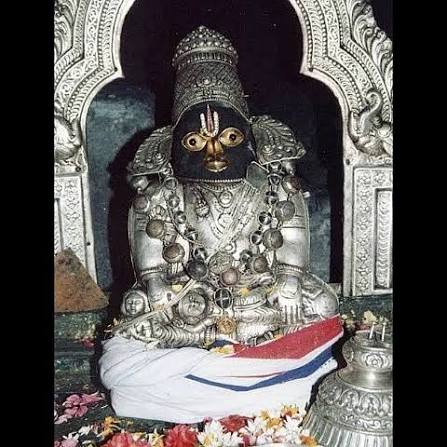
The Sanctum Idol
Ugra Narasimha, seated in sukhasana within the cave shrine
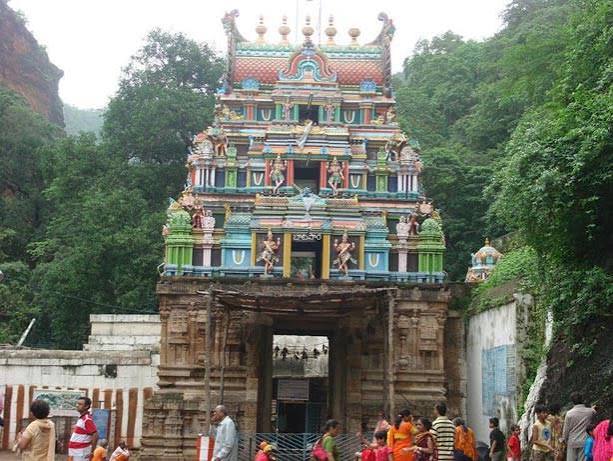
The Temple Exterior
Mandapams and gopuram carved into the hillside at Upper Ahobilam
The oldest and principal of the nine Narasimha shrines, believed to be self-manifest (Swayambhu) rather than consecrated by human hands. This is the temple that gives Ahobilam its name, and the seat of the historic Ahobila Mutt.
This is the earliest and most revered of the nine Narasimha temples, believed to house a Swayambhu (self-manifest) idol rather than one installed by ritual consecration. The Lord appears here in his fierce Ugra form, seated in sukhasana within a low-roofed cave sanctum, with the demon Hiranyakashipu depicted across his lap.
Tradition holds that after witnessing this terrifying manifestation, the celestial Devas exclaimed "Aho Bala" — "what great strength" — and the site came to be known as Ahobilam. A shrine to Chenchulakshmi, the forest form of Goddess Lakshmi who is said to have calmed the Lord's fury after the battle, stands beside the main deity.
The main shrine is carved from a single large, egg-shaped rock formation, expanded and adorned over centuries — chiefly under Vijayanagara-era patronage in the 15th and 16th centuries.
The temple's entrance halls lead toward the sanctum, with an ornate Balipeedam and Dwajasthambham (flagpole) adjoining the outer hall.
The garbha griha is a natural, low-roofed cave rather than a built chamber — its unusual north-facing orientation follows the rock's own shape.
A shrine to Lord Shiva stands facing the Narasimha sanctum just past the entrance, reflecting the site's layered devotional history.
Stone pillars throughout the complex depict scenes from the Narasimha legend, from the Lord's courtship of Chenchulakshmi to the slaying of Hiranyakashipu.
This temple is inseparable from the Sri Ahobila Mutt, one of the most significant Sri Vaishnava institutions in South India, founded here in the 14th century. The Utsava Murthy (processional deity) of Malola Narasimha — one of the nine forms — serves as the Mutt's own presiding deity, accompanying its spiritual head on religious tours across the country to this day, an unbroken tradition spanning over forty pontiffs.
See the other Nava Narasimha shrines, or read about the fiery Jwala Narasimha just a short trek from here.