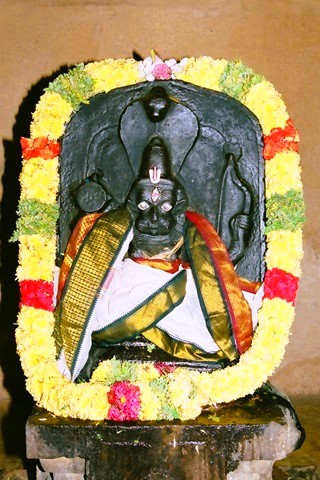
The Sanctum Idol
Four-armed, meditative, holding the Saaranga bow and chakra
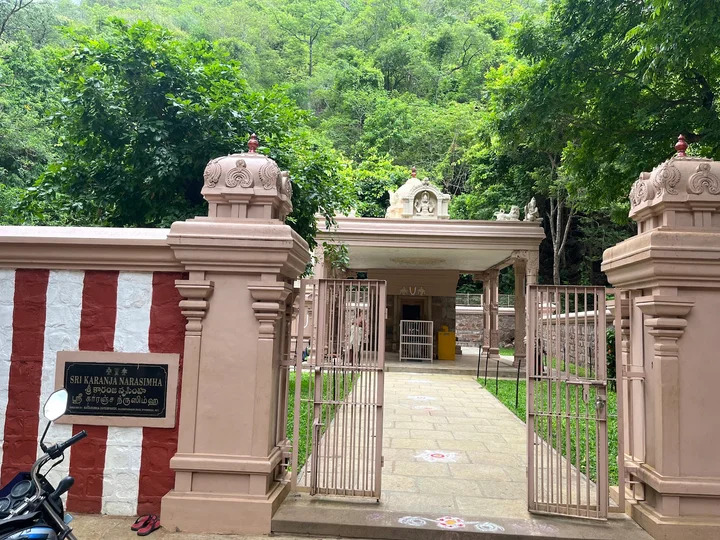
The Temple View
Facing the Bhavanasini river, with Garudadri mountain behind
Seated in meditation beneath a Karanja tree and holding the bow named Saaranga, this form of the Lord marks the spot where Hanuman himself is said to have questioned — and ultimately recognized — Narasimha as one with Rama.
Karanja Narasimha takes his name from the tree beneath which the idol stands — known locally as Honge Mara. Shown four-armed and in dhyana (meditation), he holds the bow named Saaranga in one upper hand and the Sudarshana Chakra in the other, a quieter and more contemplative aspect than the fierce Jwala or Ahobila forms.
The temple sits on the ghat road connecting Upper and Lower Ahobilam, with its sanctum facing the Bhavanasini river and the Garudadri mountain rising behind it — one of the more easily reached of the nine shrines.
The story behind Karanja Narasimha's distinctive iconography involves an unlikely encounter — the Lord's own devotee refusing, at first, to recognize him.
Tradition holds that Hanuman meditated beneath the Karanja tree at this spot, chanting the name of Lord Rama and longing for his darshan.
In answer to the call, Lord Narasimha appeared before him — but Hanuman, expecting Rama, did not recognize this fierce, clawed form as his beloved Lord.
Hanuman insisted that Rama alone, bow in hand, could be his Lord — and that the form before him, with its long nails and fiery bearing, could not be the same deity.
To convince his devotee, the Lord assumed the form now seen at this shrine — holding the Saaranga bow, Rama's own weapon, alongside the Sudarshana Chakra.
Convinced at last that Narasimha and Rama were one and the same, Hanuman worshipped the Lord in this form — remembered today by the small Hanuman shrine facing the sanctum.
Karanja Narasimha is especially associated with knowledge and intellect. One well-known tradition tells of a sage cursed to lose his wisdom, who regained it through devoted worship and chanting of the Narasimha mantra at this very shrine — a story that continues to draw students and seekers of learning to this temple today.
Continue toward the boar-faced Kroda Narasimha, or head onward to the fierce Jwala Narasimha trek.